
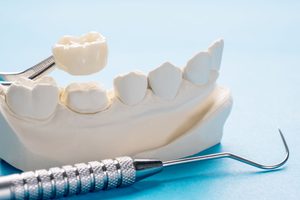
If you have a damaged, misshapen, or decayed tooth requiring treatment, your dentist might recommend placing a dental crown to restore its function and appearance. These tooth-shaped caps are a versatile way to rebuild damaged teeth that might otherwise require extraction.
But it’s natural to have questions about this treatment, and one of the first things many patients want to know is how long the results will last. Continue reading to learn more about it and how you can help maintain your smile!
What Are Dental Crowns Made From?
Dental crowns can be used to shield injured or treated teeth from further harm, cap an implant to close a gap in your grin, anchor a dental bridge in place, or reshape a worn-down or stunted tooth. Historically, these prosthetics were made from mixtures of metal, such as gold, silver, copper, tin, or platinum, which are durable enough to withstand the pressure of daily biting and chewing over the years. But they don’t blend in with your enamel, and can cause feelings of self-consciousness.
Thanks to advancements in dental technology and materials, most providers today offer tooth-colored restorations made from resilient ceramic or resin, which can be customized to match the size, shape, and tone of your teeth for beautiful results.
How Long Do Dental Crowns Last?
If you’re concerned that choosing a lifelike dental crown means you’re sacrificing longevity ‘just’ to help improve your looks, you can thankfully set your concerns aside. Although metal crowns can last for 15+ years when cared for correctly, many tooth-colored caps last just as long. Not only that, but the materials used are less likely to cause metal allergies or sensitivity.
But the lifespan of your restoration can depend significantly on your unique circumstances. For instance, if yours covers a molar, it might not last as long because it’s more involved in the chewing process and may be more likely to wear down faster.
How Can I Help Maintain My Dental Crown?
Regardless of the materials used for your dental crown, you can usually help preserve it by taking a few simple precautions, such as:
- Brushing and flossing twice daily. These covers can’t get cavities, but the underlying teeth can develop decay or disease that causes them to fail.
- Choosing foods carefully. Avoiding overly hard, crunchy, sticky, or darkly colored foods can help prevent damage and discoloration.
- Scheduling routine dental exams. Seeing your dentist every 6 months for a standard checkup and cleaning gives them a chance to identify and treat any issues, like a destabilized dental crown, before they get worse.
If you have additional questions about what to expect from or how to care for your dental crown, your dentist can provide more information based on your individual circumstances.
Meet the Author
Dr. Donna Kiesel takes pride in helping enhance her patients’ lives by improving their dental health. She earned her dental degree at the Baylor College of Dentistry, and today, she has over 30 years of experience providing a full menu of services, including dental crowns, to meet peoples’ unique needs conveniently under one roof. She takes the time to get to know your goals and concerns, then uses state-of-the-art technology to provide customized treatment plan to address them. You can request an appointment on the website or by calling (972) 420-4488.